Table of Contents
Get started with MyPerfectResume today!
- Build a resume on any device
- Pick an ATS-friendly template
- Tailor with AI copy suggestions

Why this cover letter works
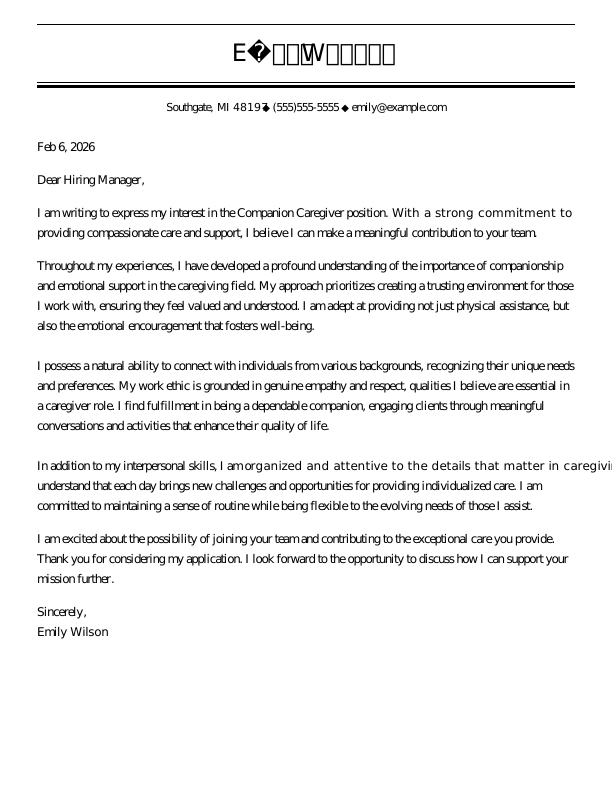
- This cover letter highlights specific instances of compassionate patient care and teamwork. For guidance on crafting a strong application, review what to include in a cover letter to stand out to hiring managers seeking dedicated professionals.
More Caregiver Cover Letter Examples
Looking to craft the perfect caregiver cover letter? Discover a variety of cover letter examples that cater to both new applicants and experienced professionals, each offering unique insights to help you stand out in your job search.
Entry-Level Caregiver Cover Letter

Why this cover letter works
- Including a cover letter header is important for caregiver applications because it contains essential contact information. Presenting this information in a professional format that aligns with the resume design improves clarity and helps employers reach potential applicants more easily.
Experienced Caregiver Cover Letter

Why this cover letter works
- Using the cover letter outline helped this caregiver create a compelling narrative that links their extensive experiences in community service and direct care to their future goals of improving the lives of those they support.
Caregiver Cover Letter Template (Text Version)
Eager to personalize your caregiver cover letter? You’ll find a text version available for easy copying, and you can explore our selection of cover letter templates to discover formats that truly showcase your caregiving experience.
Yuki Martinez
Austin, TX 78705
(555)555-5555
yuki@example.com
Mar 20, 2026
Dear Hiring Manager,
I am excited to express my interest in the caregiver position within your esteemed organization. My passion for helping others and my commitment to providing supportive and compassionate care make this opportunity particularly appealing to me.
With a strong service-oriented mindset, I take pride in my ability to connect with individuals and create an environment that fosters trust and comfort. I understand the importance of patience and empathy in caregiving, and I strive to ensure that those I assist feel valued and respected. Each interaction presents an opportunity to positively impact someone’s life, and I embrace this responsibility wholeheartedly.
In my previous roles, I have developed key skills that are essential for a successful caregiver. I am attentive to the needs of others, skilled in maintaining a safe and clean environment, and dedicated to promoting independence wherever possible. Building strong relationships is central to my approach, and I work diligently to cultivate a sense of community and support for those I serve.
I am eager to bring my compassionate nature and dedication to your team, contributing to the high standards of care that your organization is known for. Thank you for considering my application. I look forward to the possibility of discussing how I can be a valuable addition to your caregiving staff.
Sincerely,
Yuki Martinez
Related Cover Letter Examples
How to Write a Caregiver Cover Letter
Are you ready to create a standout caregiver cover letter that highlights your empathy and dedication? Learn how to write a cover letter that emphasizes your ability to provide compassionate care and build strong relationships with patients, ensuring you catch the eye of potential employers.
Address your cover letter properly
When applying for caregiver positions, aim to address your cover letter to a specific individual whenever possible. Look for the hiring manager’s name in the job posting, company website, or LinkedIn profile. This personal touch shows that you care about your application and have invested time in researching the opportunity.
If you can’t find a specific name, consider how to address a cover letter using more general greetings. Steer clear of “To Whom It May Concern” and consider alternatives like “Dear Hiring Manager” or “Dear [Department Name] Team.” For instance, if you’re applying to a home care agency, you could use “Dear Home Care Team” to reflect your familiarity with the role and organization.
Personalized greetings are significant because they offer a chance to highlight qualities that make an excellent caregiver—such as compassion and attentiveness. A thoughtful salutation sets the tone for your application and demonstrates your commitment to providing quality care, which is highly valued in this field.
Grab attention with your opening paragraph
When applying for a caregiver position, it’s important to grab the hiring manager’s attention right away. With so many applications to review, knowing how to start your cover letter can set you apart. Focus on showcasing your strongest qualities and avoid simply repeating what’s in your resume. A strong opening could highlight your experience with elderly care or a specific skill that aligns with the job requirements.
Consider what makes you stand out as a caregiver. Are you known for your compassionate approach, or perhaps your ability to manage complex caregiving tasks? Maybe you have training in memory care or have volunteered at local nursing homes. Use these unique strengths to connect with the employer’s needs and demonstrate why you’re the best fit for their team.
Example of a strong opener
With over four years of dedicated experience as a caregiver, I have successfully improved the quality of life for my clients by implementing personalized care plans that improved daily living activities by 30%. I am eager to bring my compassionate approach and strong communication skills to your team at Sunshine Care Home. Together, we can create a nurturing environment that meets the needs of residents and their families.
Looking to make your cover letter stand out? Our Cover Letter Generator creates personalized introductions that highlight your caregiving experience in seconds.
Include skills from the job ad
Do not submit a generic cover letter when applying for caregiver positions. Instead, take the time to study the job posting carefully and tailor your letter to reflect the specific skills and qualifications they are looking for. This attention to detail shows that you understand their needs and helps ensure your application passes through automated screening systems.
In your cover letter, focus on two to three key skills mentioned in the job description. Provide concrete examples from your caregiving experience that demonstrate how you have applied these skills effectively. This targeted approach not only highlights your qualifications but also illustrates why you’re the perfect fit for this particular caregiver role and environment.
Top skills to list on your cover letter
- Personal care assistance
- Mobility support and transfer techniques
- Nutritional guidance and meal preparation
- Communication with healthcare professionals
- Compassionate listening skills
- Behavioral management strategies
- Crisis intervention techniques
- Patient safety protocols
- Daily living activities support
- Emotional support and companionship
- Respect for patient privacy and dignity
- Record keeping and reporting observations
- Flexible problem-solving skills
- End-of-life care understanding
- Knowledge of mental health issues
- Family dynamics awareness
Save time by using a cover letter template from Google Docs or a Microsoft Word cover letter, as these templates offer neat formatting that allows you to focus on tailoring your content for each caregiver position.
Show your impact with numbers
In caregiving, numbers speak louder than words. Instead of saying you’re a “compassionate caregiver,” show potential employers the measurable impact you’ve made. For example, highlight how you improved patient mobility by 30% through personalized exercise plans or reduced hospital readmission rates by 25% within your care group.
These specific metrics distinguish you from job seekers who only list responsibilities, demonstrating that you actively contribute to better outcomes.
Measurable accomplishments are critical because they prove your ability to deliver results, which is what employers want to see. They indicate that you not only perform basic caregiving tasks but also excel at improving the quality of life for those in your care. By presenting clear metrics, you effectively communicate your dedication and the tangible benefits you bring to any caregiving role.
Bullet points to include in your cover letter
- Provided compassionate care to 50+ patients weekly, leading to a 95% family satisfaction rate
- Trained 15 junior caregivers, achieving a 100% pass rate on competency assessments
- Implemented a new scheduling system that improved staff efficiency by 20%
- Coordinated with healthcare teams to reduce patient transfer times by 15%
- Maintained an incident-free record for over two years during home visits
Selecting the right cover letter format can help caregiver applicants highlight their measurable achievements. Some layouts are better suited to showcase specific metrics depending on your experience level in caregiving.
Leave a lasting impression
Your closing paragraph should reinforce your enthusiasm and prompt the hiring manager to take action. Understanding how to end a cover letter involves being direct about your interest while maintaining a professional tone.
Thank them for their consideration, reiterate your excitement about the caregiver opportunity, and clearly express your eagerness to discuss how your skills can positively impact their team. This approach not only shows your passion but also invites further conversation regarding your potential contributions.
Example of cover letter closing
Thank you for considering my application for the caregiver position at Harmony Senior Living. I am eager to bring my compassionate nature and extensive experience in elderly care to your dedicated team. I would love the opportunity to discuss how my skills can improve the quality of life for your residents and support your mission of exceptional care. I look forward to the possibility of contributing to your organization’s success and hope to hear from you soon.
Tailor your cover letter for specific situations
As a caregiver with a non-traditional background, it’s best to directly address your unique circumstances in your application. Acknowledge any changes you’ve made in your career path and then seamlessly transition into how your experiences make you a valuable job seeker.
- If you’re changing careers, highlight transferable skills that relate to caregiving. For example, if you’ve worked in hospitality, emphasize how your customer service skills improve patient interactions and create a comforting environment.
- Returning caregivers should mention how they’ve stayed updated through training or volunteering while showcasing their passion for patient care. Highlighting this commitment can reassure employers of your readiness to re-enter the field.
- New graduates can focus on hands-on experiences from internships or clinical placements. Additionally, mentioning roles like volunteering at nursing homes or working as a personal support worker will help illustrate your dedication to the profession.
FAQ
How long should a caregiver’s cover letter be?
A caregiver cover letter should be one page long, typically structured in three to four paragraphs. This format provides ample opportunity to showcase your relevant experience and skills while ensuring the hiring manager can easily digest the information.
Knowing how long a cover letter should be is key to making a great impression. Being concise and focused allows you to capture attention quickly. Remember that hiring managers spend only a short time reviewing each application, so make every word count to stand out from the crowd.
What’s the difference between a cover letter and a resume?
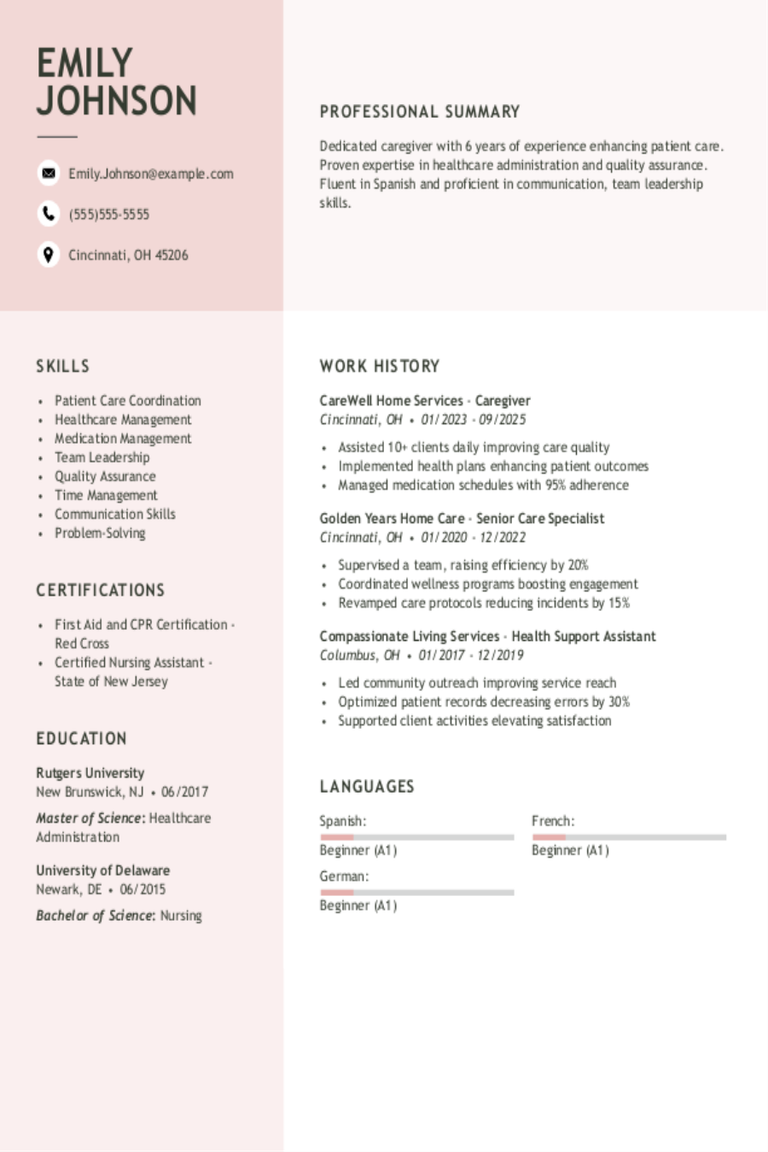
When applying for caregiver positions, your caregiver resume outlines your relevant experience, skills, and education in a clear and organized manner.
This document serves as the “what” of your application, highlighting what you have achieved in your caregiving career and the roles you have held. In contrast, your cover letter shares the narrative that connects these qualifications with your personal story.
Your cover letter is the “why” and “how.” It conveys your passion for caregiving, explains why you’re an excellent fit for this particular position, and expresses your interest in the organization itself. Understanding the distinction between a cover letter vs resume allows you to present different facets of your professional journey.
Recognizing this difference helps you create a more compelling application that showcases both what you bring to the table and why it matters to potential employers.
Should I include a cover letter even if it’s not required?
Absolutely! Including a cover letter, even when it’s optional, shows your dedication and willingness to go the extra mile in caregiving.
Hiring managers in this field are looking for applicants who not only possess the right skills but also demonstrate empathy and strong communication abilities. A resume may outline your experience, but it doesn’t capture the personal touch that makes a caregiver truly exceptional.
Imagine this situation: two equally qualified caregivers apply for the same role, but only one submits a heartfelt cover letter detailing their commitment to providing compassionate care and building relationships with clients.
In discussions about whether cover letters are necessary, it’s clear that this thoughtful addition could set one job seeker apart from the other. When in doubt, include that cover letter—it can be your chance to shine and show how much you value the opportunity to make a difference in someone’s life.
What does a professional cover letter look like?
A professional caregiver’s cover letter should be clean, organized, and easy to scan at a glance. Use a standard business letter format by placing your contact information at the top, followed by the date and employer’s details.
Choose a professional font like Arial or Times New Roman in 11-12 point size to ensure clarity, along with standard margins and single spacing between lines.
The layout should consist of a clear header, a personalized greeting (avoid generic salutations), and three to four concise paragraphs in the body that highlight your qualifications. Include a formal closing with your signature and maintain ample white space to improve readability, as hiring managers often review numerous applications quickly.
For more guidance on what a cover letter should look like, explore our resources for visual examples and formatting tips that will help make your application stand out as polished and professional.
Can ChatGPT write a cover letter?
While you can use ChatGPT to write a cover letter, it may lack the personal touch you need. AI might help overcome writer’s block and brainstorm ideas, but often the result is content that feels generic and robotic. Relying solely on these tools can lead to letters that don’t truly represent your unique qualities as a caregiver.
Hiring managers in caregiving roles can easily spot AI-generated letters since they typically miss specific insights and genuine passion required for this job. These letters often fail to convey the warmth and empathy essential in caregiving.
Instead of depending entirely on AI, consider using it as a guide to organize your thoughts, then infuse your cover letter with real experiences and personal stories about why you want to work at that particular facility. Your authentic voice will always resonate more than any automated content.
Rate this article
Caregiver


Marla is a professional resume writer. She is committed to helping job seekers navigate the job market and succeed in their careers.
More Articles by Marla FigueroaShare this page
 Add MyPerfectResume as a preferred source on Google
Add